Driving the length of Baja to La Paz is one of the great road trips in North America: about 1,500 km of desert, mountains and two coastlines on Highway 1. It is very doable, and it goes much smoother when you know what to bring, where to cross, where to get gas and how the checkpoints work. Here is what we tell friends before they come down.
Before You Go: Papers and Insurance
- Passport or passport card for everyone in the car, plus your driver's license and the vehicle's current registration (and for any trailer, boat or ATV you're towing).
- FMM tourist permit. Everyone needs one in Baja, including the border area. It's free for stays of 7 days or less by land; longer stays pay a fee (listed by Baja Bound at 983 MXN). You can apply online before you go, but either way it has to be stamped at the immigration (INM) office at the border to be valid. Immigration checks FMMs further south, including at Guerrero Negro, and people without one can be turned back.
- No vehicle import permit needed. The whole Baja peninsula is a free zone, so you don't need a Temporary Import Permit (TIP) to drive to La Paz. You only need one if you continue to mainland Mexico, for example on the ferry.
- Mexican car insurance is required by law. Your US or Canadian policy does not count as liability coverage in Mexico. Buy a policy from a Mexican insurer before you cross and keep a printed copy in the car. Two places we recommend:
- Baja Bound: Mexican auto insurance online, and the best free travel guides for driving Baja.
- Vagabundos del Mar: a Baja travel club with Mexican auto and boat insurance for members, road reports and travel guides.
What You Can Bring, and What You Can't
Your personal things cross free: clothes, phone, laptop, camping gear, fishing rods, surfboards and your medication. On top of that, each traveler can bring a limited value of new goods and gifts duty-free, and families in the same car can combine their allowances. The amount has changed over the years, so check the current figure on Baja Bound's guide or with Mexican customs before you go. Above it, you declare the goods and pay duty at the border.
Unpack new things before you cross. A brand-new TV, phone or tool still in its box looks like something you're importing to sell, and it can get you pulled aside and charged import duty. Take new items out of their packaging, throw away the boxes and use them like the personal things they are.
Leave at home:
- Guns and ammunition. Not even a single bullet. US permits mean nothing in Mexico, and the penalties are serious.
- Drugs, including cannabis, whatever your home state allows.
- Fresh food from home: raw meat, fresh cheese, fresh fruit and vegetables, homemade food, plants and soil. Packaged, canned and dried food is fine, and you'll find great produce here.
Alcohol and tobacco have their own limits (3 liters of spirits and 6 liters of wine per adult). Baja Bound's guide What can I bring into Mexico? has the full list.
Bringing Your Dog
Dogs are welcome, and lots of people bring theirs down. Since August 3, 2026, Mexico requires a New World screwworm inspection certificate for dogs entering from the US, signed by a USDA-accredited vet no more than 5 days before you cross. Book the vet appointment ahead, since not every clinic has an accredited vet. When Evan drove down with Layla, his Malinois, nobody asked for any paperwork and the crossing went smoothly, but inspectors can ask, so have it with you. They may also look the dog over, so make sure flea and tick treatment is up to date. Bring vaccination records, and a sealed bag of food (one bag up to 22 kg / 50 lb). Coming back into the US has its own separate paperwork. Baja Bound's pet guide keeps the current rules.
Where to Cross
- San Ysidro / El Chaparral (Tijuana). Open 24 hours and the most direct way onto the toll road to Ensenada and Highway 1. The INM office for your FMM is right at El Chaparral.
- Otay Mesa. Open 24 hours, and the toll roads let you skip most of Tijuana.
- Tecate. Smaller and calmer, with shorter hours (about 6 AM–10 PM). Narrow streets on the Mexican side, so not ideal for big RVs or trailers. From Tecate, Highway 3 runs through the wine valley to Ensenada.
- Mexicali. For the Gulf-side route through San Felipe and Gonzaga Bay, which joins Highway 1 south of Cataviña.
Check live wait times on the US CBP site before you leave, and cross early in the morning. Get your FMM stamped before customs: park in the declaration area, go to INM, then drive on.
The Route and Where to Stop
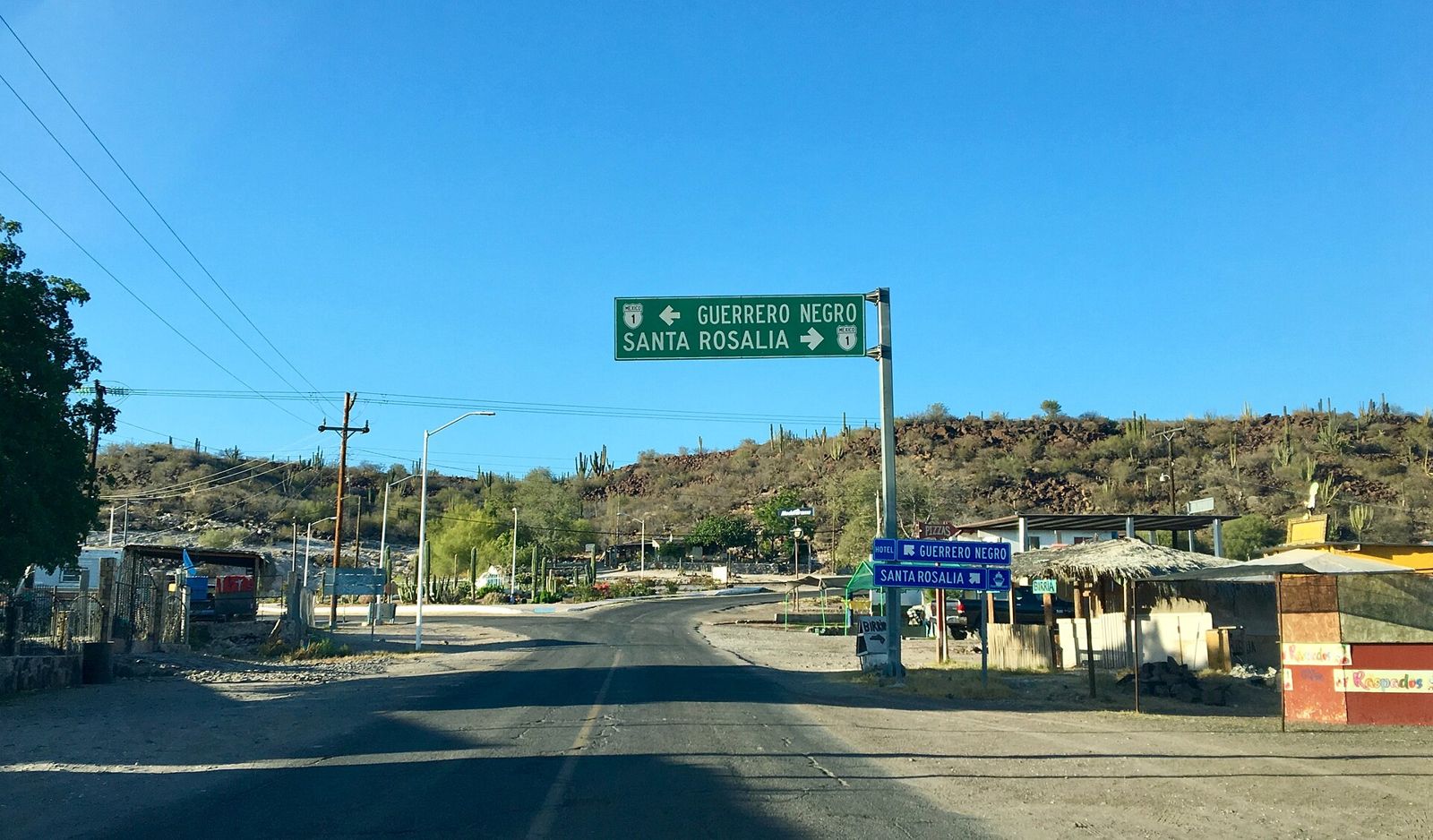
Most people take two to three days to drive from the border to La Paz. The usual way is the Pacific route on Highway 1: Ensenada, San Quintín, El Rosario, Cataviña, Guerrero Negro, then across to the Sea of Cortez at Santa Rosalía, down through Mulegé, Loreto and Ciudad Constitución to La Paz. For the first night, either push on past Ensenada toward San Quintín, or slow down and stay in the Valle de Guadalupe wine country, which is great. After that, Guerrero Negro and Mulegé or Loreto make good overnight stops. Plan each day to arrive before dark (more on that below).
Gas
- Fill up whenever you can, especially north of Guerrero Negro. The big gap is south of El Rosario: roughly 200 miles of desert before reliable stations again near Villa Jesús María and Guerrero Negro. Top off in El Rosario every time, and consider a full gas can in the back.
- Don't count on Cataviña. People sometimes sell fuel there from barrels, but it isn't reliable.
- South of Guerrero Negro, every bigger town has stations.
- Carry pesos in cash, check that the pump starts at zero, and tip the attendant who pumps your gas and cleans your windshield.
Road Conditions — and Watch for Cows!
Highway 1 is paved the whole way, but it is a two-lane road with no shoulders for long stretches, steep drop-offs, sharp curves and big trucks. Expect potholes, topes (speed bumps, often unmarked at the edge of towns) and vados (dips where the road crosses an arroyo, which can flood after rain). Slow down when you see a sign for either.
Watch for cows. Much of Baja is open range. Cows, horses, burros and goats stand on or walk onto the highway, and a black cow on a black road at night is almost impossible to see. Don't drive at night. Be at your stop before sunset.
If you break down, Mexico's Green Angels (Ángeles Verdes), the government's roadside help trucks, patrol the federal highways; dial 078.
Checkpoints: Start With "Muy Buenos Días"
You'll pass several military checkpoints on the way down, plus an agricultural inspection where Baja California meets Baja California Sur near Guerrero Negro, where they spray your tires for a small fee. They are routine. The soldiers may ask where you're coming from and where you're going, and sometimes ask to look in the car. Slow down, take off your sunglasses, roll down the window and stay friendly.
Above all, start with a greeting: "¡Muy buenos días!" in the morning, "¡Muy buenas tardes!" in the afternoon. It makes a real difference. These are people working long days in the sun, and here a friendly greeting comes before anything else, at a checkpoint, in a shop or anywhere. A smile and a buenos días nearly always makes for a better experience for everyone.
When You Get to La Paz
You've earned it. La Paz is the end of the long drive, and the start of the best of the Sea of Cortez: whale sharks in the bay from mid-November through April, Isla Espíritu Santo and the sea lions at Los Islotes, and Balandra by boat. Our office is on the Malecón, and parking on 16 de Septiembre is usually easy.
Sources
Permits, customs, pets and crossings: Baja Bound Travel Guide (October 2026). Insurance and club: Vagabundos del Mar. Rules change — check the latest with Mexican customs (aduanas), INM and SENASICA before you go.
Made It to La Paz?
Whale sharks, sea lions, Isla Espíritu Santo and Balandra, small groups with a marine biologist guide.
See Our Tours → Whale Sharks